

2,000 Labels Per Base Station | Opticon SE-214 2.1″ ESL
Call for Price
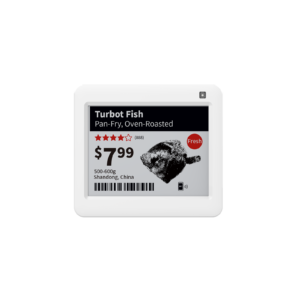
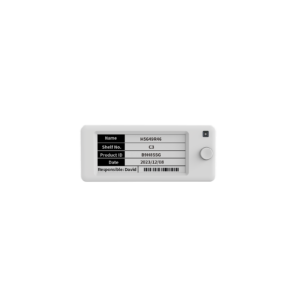
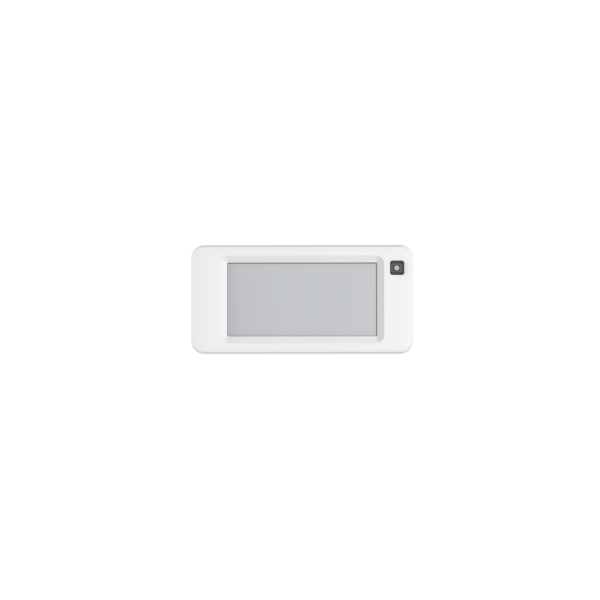
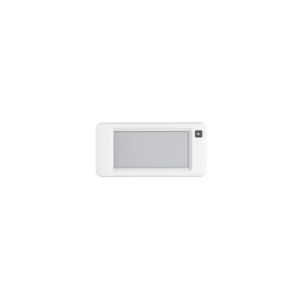
2.1″ e-paper label with the highest deployment density in the SE-Range.
– 2,000 displays per base station — 2.5x the 5.83″ SE-583RY
– Fewer base stations per site means less RF planning and lower fit-out cost
– 250 x 122 px at 130 dpi, the finest pitch in the range
– Centralised administration across the whole estate
– ~5-year battery life on 2x CR2450 cells
- Description
- Specification
- Download
Description
Opticon SE-214 — 2,000 Displays Per Base Station
On a single-store pilot, base station count is a rounding error. On a hundred-store rollout it’s a line item, a site survey, a network drop and a fit-out visit multiplied by every store. The SE-214 carries 2,000 displays per base station — the highest density in the SE-Range — which changes that arithmetic.
What the density difference actually buys
| Model | Size | Displays per base station |
|---|---|---|
| SE-583RY | 5.83″ | 800 |
| SE-420 | 4.2″ | 1,000 |
| SE-290A | 2.9″ | 1,500 |
| SE-214 | 2.1″ | 2,000 |
A 6,000-facing store needs eight base stations on the SE-583RY and three on the SE-214. Multiply across an estate and the saving isn’t only hardware — it’s fewer network drops, fewer power points, a shorter site survey, fewer devices to monitor, and fewer things to fail. For a rollout programme those secondary costs usually exceed the base station price itself.
Where the SE-214 fits, and where it doesn’t
Density is only an advantage if the label is large enough for the job. The SE-214’s 48.6 x 23.7 mm active area suits facings that need a price, a short name and a code — health and beauty, confectionery, small electricals, spirits, pharmacy, accessories. It is not the label for a fresh counter needing per-kilogram pricing plus origin plus allergen routing, or for an aisle marker meant to be read from ten metres. Those want the SE-420 or SE-583RY, and a mixed-size estate on one base station infrastructure is a perfectly normal design.
The practical approach on most sites is to size by fixture rather than standardising: SE-214 across the dense low-value facings that make up the bulk of the SKU count, larger labels where the content demands it. Because all four run the same 2.4 GHz IEEE 802.15.4 protocol and the same management software, that’s a single system regardless of how many sizes are in it.
One system across the estate
The Opticon ESL Web Server Software administers the whole deployment centrally — every store, every fixture, every size of label. Price changes, template updates and promotional schedules propagate from one place rather than store by store. Range is a typical 25 metres indoors or 100 metres in open field, with transmission up to 250 kbps.
Low maintenance burden at scale
Battery replacement is the recurring cost nobody models properly at pilot stage and everybody feels at estate scale. E-paper is bistable — power is drawn only when the image changes, and the image persists without power at all — so two CR2450 lithium primaries deliver approximately five years at five updates per day. On a large estate that’s worth modelling honestly: a store doing significantly more than five daily updates per label, or making heavy use of the locator LED, will hit replacement sooner, and the labour of swapping cells across thousands of facings is the dominant lifetime cost. Build the replacement cycle into the business case from your actual update frequency rather than the headline figure.
| Display | 2.1″, 250 x 122 px, 130 dpi, active area 48.6 x 23.7 mm |
| Models | SE-214R (black/white/red) · SE-214RY (black/white/red/yellow) |
| Capacity | 2,000 displays per base station |
| Protocol | IEEE 802.15.4 based, 2.4 GHz (2405–2480 MHz), up to 250 kbps |
| Range | ~25 m indoor / 100 m open field |
| Management | Opticon ESL Web Server Software |
| CPU | 64 MHz Arm® Cortex™-M4, 32 MHz clock |
| Memory | 192 KB ROM / 24 KB RAM internal, 1 MB external ROM |
| LED | 1x RGB, adjustable brightness and duty level |
| Battery | 2x CR2450 lithium primary, ~5 years at 5 updates/day |
| NFC | Optional |
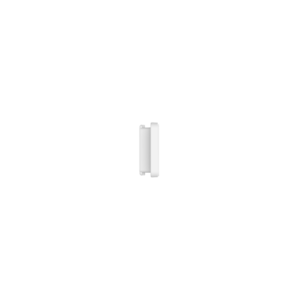
| Physical | 72.8 x 35.8 x 13.7 mm, approx. 31 g |
| Environment | 0–40 °C operating, −20–60 °C storage, 40–60% RH non-condensing |
| Compliance | CE, FCC, RoHS, REACH |