
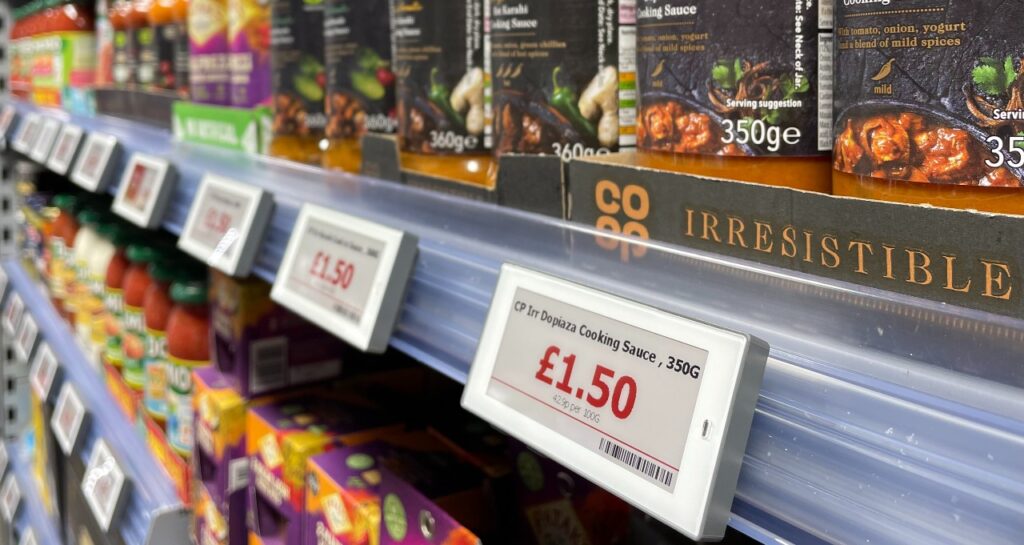
In today’s fast-paced retail environment, efficiency and customer experience are top priorities. Traditional paper price tags are quickly being replaced by electronic shelf edge labels (ESELs), a modern solution that helps retailers save time, reduce costs, and provide accurate, real-time pricing.
What Are Electronic Shelf Edge Labels?
Electronic shelf edge labels are digital price tags, usually powered by e-ink technology, that display product prices, promotions, and key product information directly on store shelves. Unlike paper labels, which require constant manual updates, ESELs can be updated remotely through a central system. This ensures that all product prices remain accurate and consistent across the entire store.
Benefits of Electronic Shelf Edge Labels
- Real-Time Price Updates – Retailers can instantly adjust prices across multiple locations, ensuring accuracy during promotions, flash sales, or seasonal changes.
- Reduced Labor Costs – Staff no longer need to manually replace paper labels, freeing up time for customer service and other value-added tasks.
- Improved Accuracy – Errors in pricing can damage trust and reduce sales. Electronic shelf edge labels eliminate mismatched prices between shelves and checkouts.
- Enhanced Customer Experience – ESELs can display more than just prices—they can also show product details, QR codes, or even digital promotions, making shopping more engaging and informative.
- Sustainability – By reducing paper waste and printing costs, electronic shelf labels support greener, eco-friendly retail operations.
How Electronic Shelf Edge Labels Work
Electronic shelf edge labels connect to a store’s central pricing and inventory system. Using wireless communication, prices and promotions are automatically updated. Most ESELs use low-power e-ink screens, ensuring high readability and long battery life, often lasting up to five years without replacement.
Applications Across Industries
While supermarkets are the most common users of electronic shelf edge labels, they are also increasingly popular in:
- Electronics stores – for displaying product specs alongside prices.
- Pharmacies – for accurate updates on medicine prices and availability.
- DIY and hardware retailers – where frequent price changes are common.
- Fashion stores – to support dynamic pricing and special offers.
The Future of Electronic Shelf Edge Labels
As retail moves toward digital transformation, electronic shelf edge labels are expected to play a key role in omnichannel strategies. Integration with AI and data analytics will enable dynamic pricing, personalized promotions, and smarter inventory management.
The shift from paper tags to electronic shelf edge labels marks a major step forward in retail innovation. By improving efficiency, reducing costs, and enhancing the customer experience, ESELs are helping retailers stay competitive in a rapidly changing market.
For businesses looking to modernize their stores, adopting electronic shelf edge labels is not just a trend—it’s the future of retail.
